Spring is a time of new beginnings and growth. In the tough times we currently face, spring brings with it a renewed hope that we will overcome the COVID-19 pandemic.


This is also a time when we celebrate a multitude of cultures, languages, religions, and art forms of all South Africans, as September is dubbed Heritage Month. Being one of South Africa’s foremost custodians of the country’s natural and cultural heritage, we tell visually appealing stories on our exquisite coins that we can all resonate with and take pride in. In this last offering in the museum series, we would like to show you how our rich history and culture is meticulously crafted and represented on a collectible coin from raw materials to final products.

FROM METAL TO MONEY

We have journeyed together through the history of the South African currency, and seen how our colleagues work to bring design to life, now we’d like to show you how we get from metal to money when making a collectable coin.

 
CASTING

Production starts at the highly modern continuous casting furnace, where the raw materials are melted and then cast through casting dies manufactured from very high-grade graphite. There are separate casting dies for 22ct, 24ct and silver.

The gold that is melted in the crucible is activated by a starter bar which is placed in the die, to which the liquid gold attaches and thus initiates the casting process.

As soon as the correct temperature is reached, the starter bar is withdrawn from the die very slowly, and as it is pulled out, the molten gold flows into the die and solidifies. The metal comes out in one thickness and is then rolled down, the result of which is a drawn bar.

ROLLING

After the casting process, the drawn bar is washed and then rolled on a rolling mill to the correct thickness for the coin that is being minted. On the mill, the drawn bar is passed between two rollers to form a strip. The strip length is increased as the thickness is decreased.

Two operators control this process manually, one placing the strip into the mill and the other removing the strip from the mill. This is done with extreme care to prevent surface contamination as well as to avoid scratches to the strip surface.

When the correct thickness is achieved, the strip is washed and inspected for any surface errors. Once it is inspected, the strip is then ready to be blanked.

 
BLANKING

During the blanking process, a blanking machine which is fitted with a punch and a cutter according to the specific diameter required, is operated manually by an operator. It is again very important that the strip be handled with extreme care so that the surface is not scratched and it can yield the maximum number of blanks possible.

Once the blanks are cut, they are individually inspected, looking at weight, diameter, and visual acceptance according to the requirements of the required coin to be minted.

ANNEALING

Only 22ct gold and silver blanks go through this stage which uses an open-ended steel belt furnace, equipped with heating and cooling zones that are protected by a continuous flow of gas, called an annealing furnace. The coin blanks are placed in the annealing furnace to soften them (relieve stress).

After softening, the blanks are placed in a heated acid and water solution for 5 to 10 minutes to eliminate any surface contamination, and their hardness is tested. Thereafter, the blanks are ready to be polished.

Tool Setter (Blanking), James Mokhoko has worked for the South African Mint for 8 years and loves his job. He says that his team is small but works together effectively to ensure the smooth running of the machines used in blanking. He works with advanced equipment which is constantly being improved, allowing him the opportunity to improve as well. The new rimming machines are his favourite as they run faster and allow a lot more work to be complete in a shorter period.
Vincent Chipa.jpg
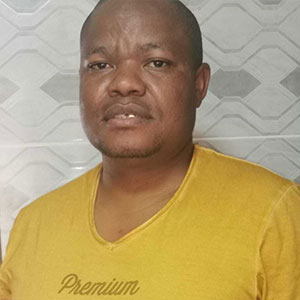
Brian Ubisi is a Quality Assurance Operator (Annealing) and he is responsible for “softening” coin blanks and removing oxides from the metal. He explains that the most exciting part of the process is when some the gases he uses actually brighten the colour of the metal on the blanks.
 
POLISHING

The surface of each blank is polished to a very high lustre to obtain an exceptional surface finish.

The blanks are loaded into the polishing tub with special polishing compound and polishing media made of minute stainless steel balls of different shapes. The Blanks will then be separated from the polishing media after the polishing process has been completed. The blanks will be loaded onto the special drier with a heat plate and special cloths.

If they pass the inspection, they are individually packed in a special tray. They are now ready for the coining process.

COINING

In the coining process, the blank is struck with two dies simultaneously, one for the obverse coin face and the other for the reverse coin face.

The coining operator individually selects each blank, and feeds it into the coining press, which contains multi-stroke 200 – 260 ton knuckle presses, and a serrated collar that restricts the sideways flow of the material.
Each blank is struck between three and five times, depending on the diameter and detail of the coin being minted. After the coin is struck, the operator removes it and inspects it under a magnifying glass before placing it on a special storage tray.

Some coins are also placed in capsules at this stage. The dies are cleaned with a special soft cloth to remove any residue from the die faces first before the next blank can be struck.

The coins are now ready to be packed according to specific packaging requirements.

Did you know: Circulation coins are struck once under normal pressure and at a high speed rate – as they need to be produced in large quantities in accordance to the demands of a country. Collectable coins, in contrast, are usually struck at least twice, under high pressure in order to bring out all of the details in the design as they draw their charm from the immaculate representation of the design, as well as the limited quantities they come in.

 
PACKING

Packing is the last phase before a coin is ready to be sold. Also a manual process, packers begin by conducting a final inspection of the coins.

The approved coins are then placed in different packaging created to compliment the coin theme and appeal to collectors. Some are even accompanied by value adding items in the packaging such as medallions or miniature models.

Packing Team Leader, Sylvester Tlhemo reflects on how exciting and nerve-wracking it was when the packing plant was established and he was appointed to lead the packing team. This experience, he explains, has not only given him professional experience he didn’t have before, but also taught him to self-reflect and adapt if necessary. He also says while the packing process suns smoothly for the most part, challenges do come up which affect order schedules but these are also just another opportunity to see how things can be done differently.
CHILDREN LEARN BETTER THROUGH DOING

According to the Britannica Kids Encyclopedia, manufacturing is the process of making products, or goods, and the businesses that make products are called manufacturers. Why not turn your young engineers into manufacturers with this fun activity to make a coin bank? Simply download, print and watch them have fun ‘manufacturing’ their own product!

Click here to download the coin bank activity.

BULLION, PROOF, UNCIRCULATED, OR CIRCULATING COIN – WHAT IS THAT?

You’ve heard the terms bullion, proof, uncirculated, or circulating coin, but do you know what they mean? Do you know the difference between them? Next month we’d like to give you a brief collector’s guide to striking standard.